
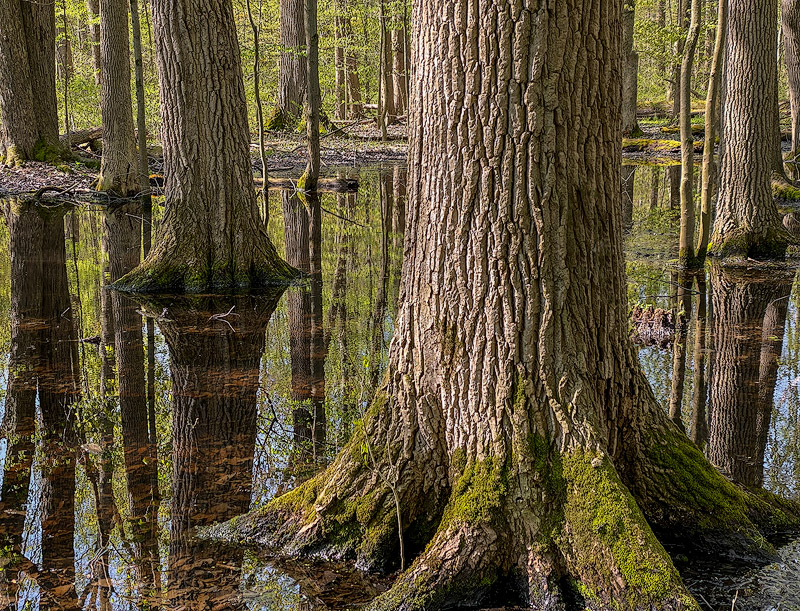
The photo shown above, a spring view of the Sandusky River, was taken from Heck Bridge in Seneca County, Ohio, about 9 miles south of Tiffin. About 65 miles of the Sandusky River, from US Route 30 in Upper Sandusky to Roger Young Memorial Park in Fremont, was designated a State Scenic River on January 5, 1970.

Heck bridge is just north of Waypoint D on the Trail Map shown above, which is located in the parking lot at Howard Collier State Nature Preserve, a 115-acre woodland west of Heck Bridge along the floodplain and adjoining ridges near the Sandusky River. The preserve’s namesake, Howard Collier, was a former Ohio Budget Director who obtained substantial funding for Ohio parks during his tenure. The preserve parking lot, shown as Waypoint A on the map above, is located at 1465 W. Township Rd 38, Tiffin, OH 44883. The GPS coordinates are 41.00415, -83.20184.

From the parking lot, the trail heads east for a few yards to a wooden staircase bordered by large tulip trees that descends a steep ridge to the floodplain of the Sandusky River. The staircase has several viewing platforms, and is one of the most impressive trail construction accomplishments in Ohio’s State Nature Preserves System.

As I descended the stairway, the chipping alarm calls of several resident Eastern Chipmunks, Tamias striatus, punctuated the woodlands. As many as 20 species of ground squirrels can be found in the American West, but in the Eastern United States only T. striatus and its larger cousin, the Thirteen-lined Ground Squirrel, Ictidomys tridecemlineatus, occur.
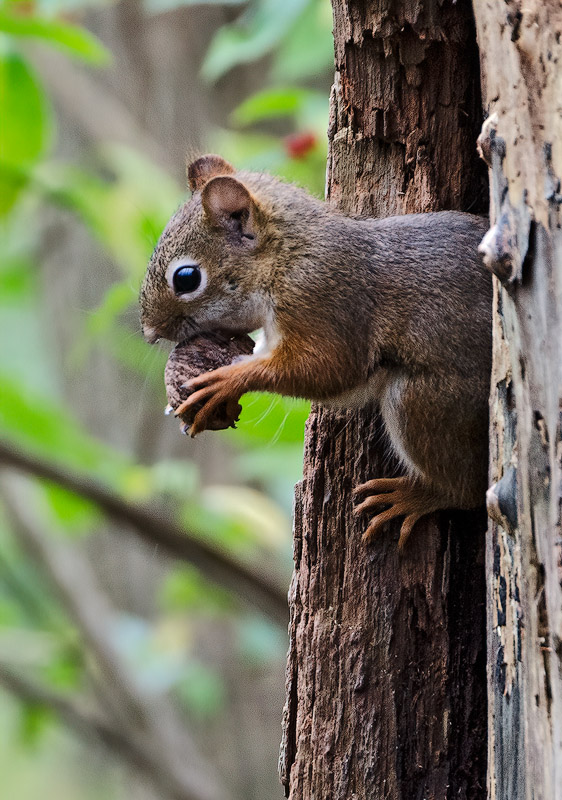
Below the stairway, on the edge of the Sandusky River floodplain, a Red Squirrel (I think), Tamiascuiris hudsonicus, nibbled on a nut fragment from its arboreal perch. The Red Squirrel is twice the size of an Eastern Chipmunk but only about half the size of an Eastern Gray Squirrel.

Shortly after reaching the floodplain of the Sandusky River, the trail skirts the edge of a large wetland, which features an extensive display of Marsh Marigold, Caltha palustris, and Skunk Cabbage, Symplocarpus foetidus, in late April and early May.

Ohio has more than 25 species of native violets, and several may be found along the loop trail at Howard Collier State Nature Preserve, including Canada Violet and Common Blue Violet, Viola sororia, shown in the photo above. Another woodland wildflower, Wild Geranium, Geranium maculatum, shown below, borders the edges of the trail during May.

May is also a great month to look for migrating songbirds heading north to their breeding grounds, including the Palm Warbler, Setophaga palmarum, which bobs its tail as it searches for insects at ground level in the woodlands.

When I walked the loop trail at Howard Collier on May 11, many bees, flies, and other insects were patrolling the area, including several iridescent green Six-spotted Tiger Beetles.


Along the eastern section of the loop trail, an extensive area of vernal pools extends south toward the ridge. Canada geese, Mallards, Wood Ducks, frogs, salamanders and other amphibians may be observed in these wetlands.
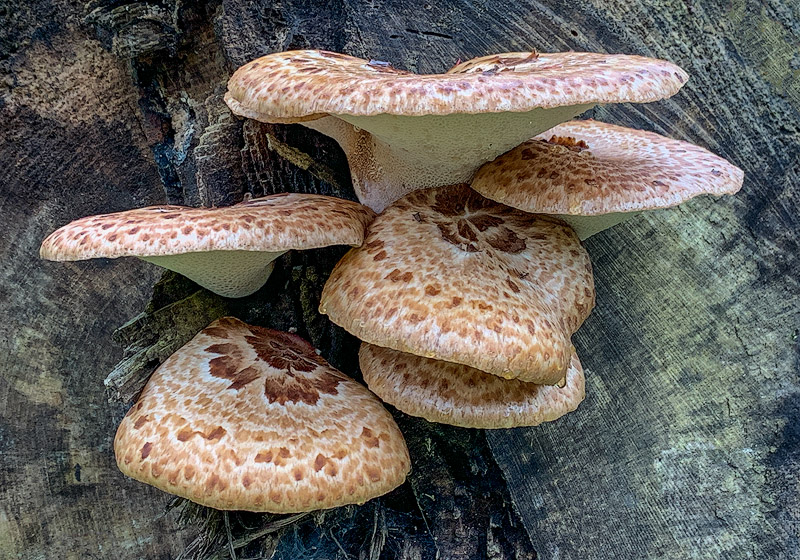
In spring, the many fallen trees in this area are good places to look for Dryad’s saddle mushrooms, also called pheasant’s back. Mature specimens are tough and indigestible, but young caps are popular with edible mushroom hunters. I prefer to admire and photograph their distinctive patterned caps.
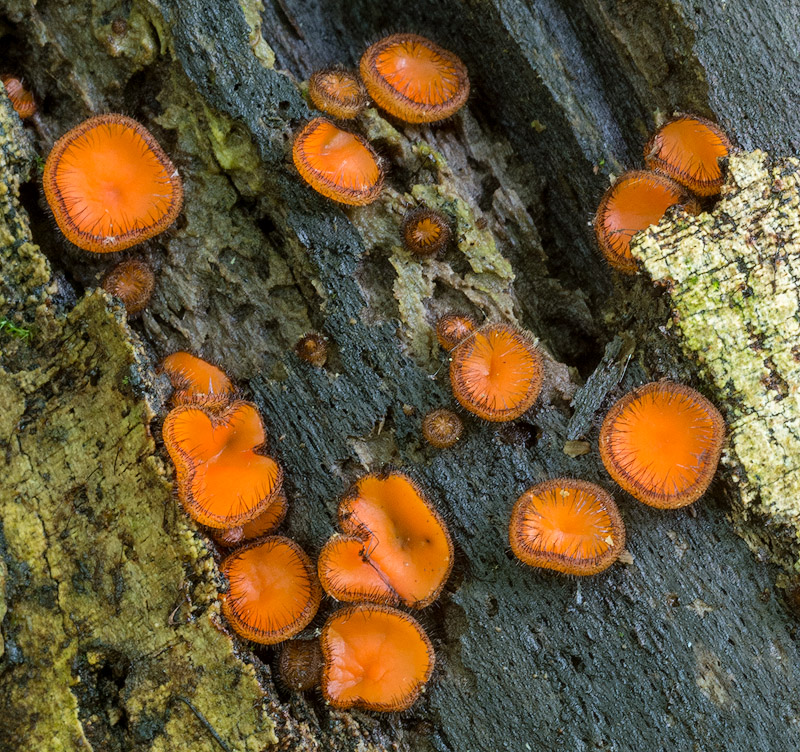
Another beautiful mushroom found growing in groups on wood is the tiny Eyelash Cup, Scutellinia scutellata. You will need a magnifier to see the tiny, dark hairs growing around the rim of the caps.
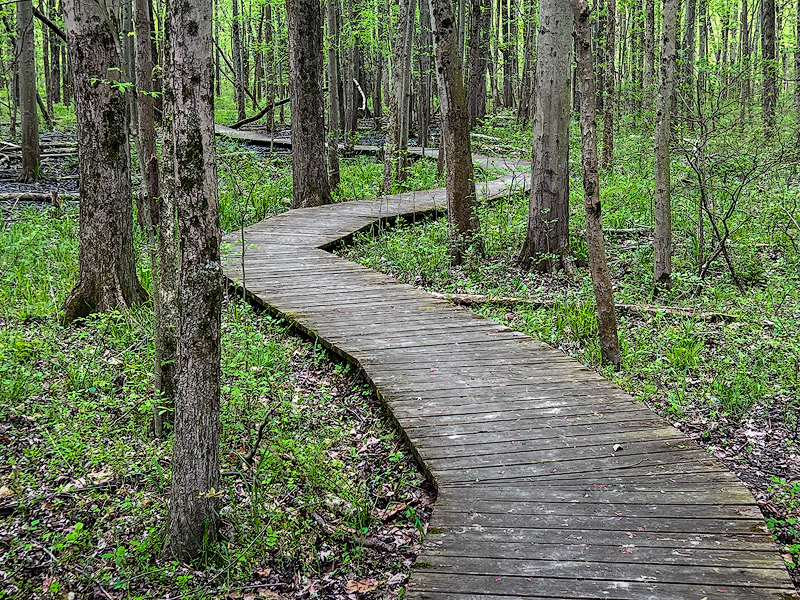
A boardwalk takes you south along the edge of the vernal pools before reaching an old road and a trail to the right which ascends the ridge and brings you back to the midpoint of the stairway that leads back to the parking lot.
The 1.5-mile loop trail at Howard Collier State Nature Preserve is an enjoyable hike, especially in spring when the wildflower displays are at their peak.